
Protecting Cash Assets and Vital Records: Why Commercial Safes Are Due for an Audit
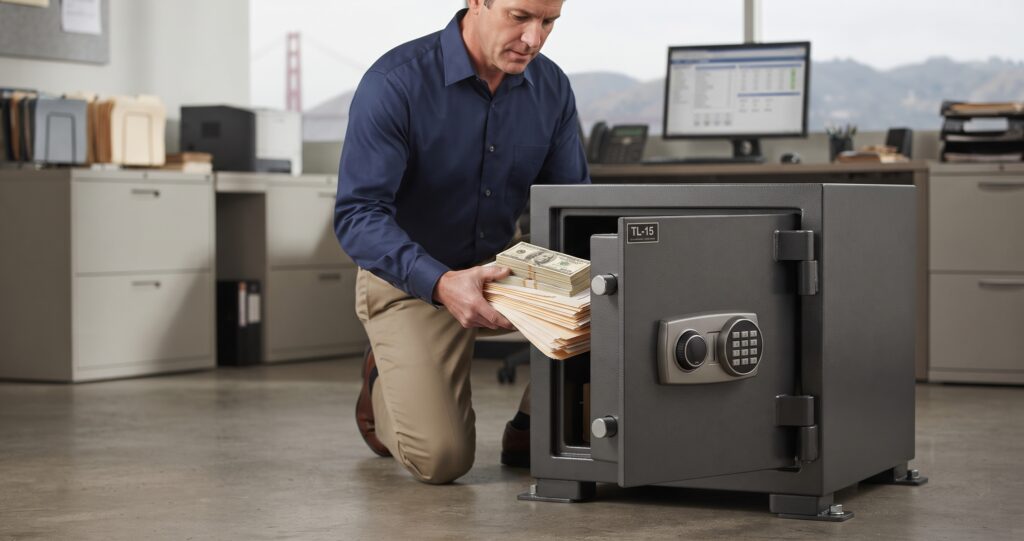
As businesses navigate shifting economic pressures and local security adjustments, internal asset security and cash handling are under tighter scrutiny. Because of this, physical safe integrity is more critical than ever.
Many small business owners, retail operators, and office managers assume their back-office safe will last forever. However, physical security hardware wears down over time. If you have not inspected your office safe recently, now is the ideal time to schedule a thorough commercial safe audit.
Understanding Your Safe: Fire Protection vs. Burglary Ratings
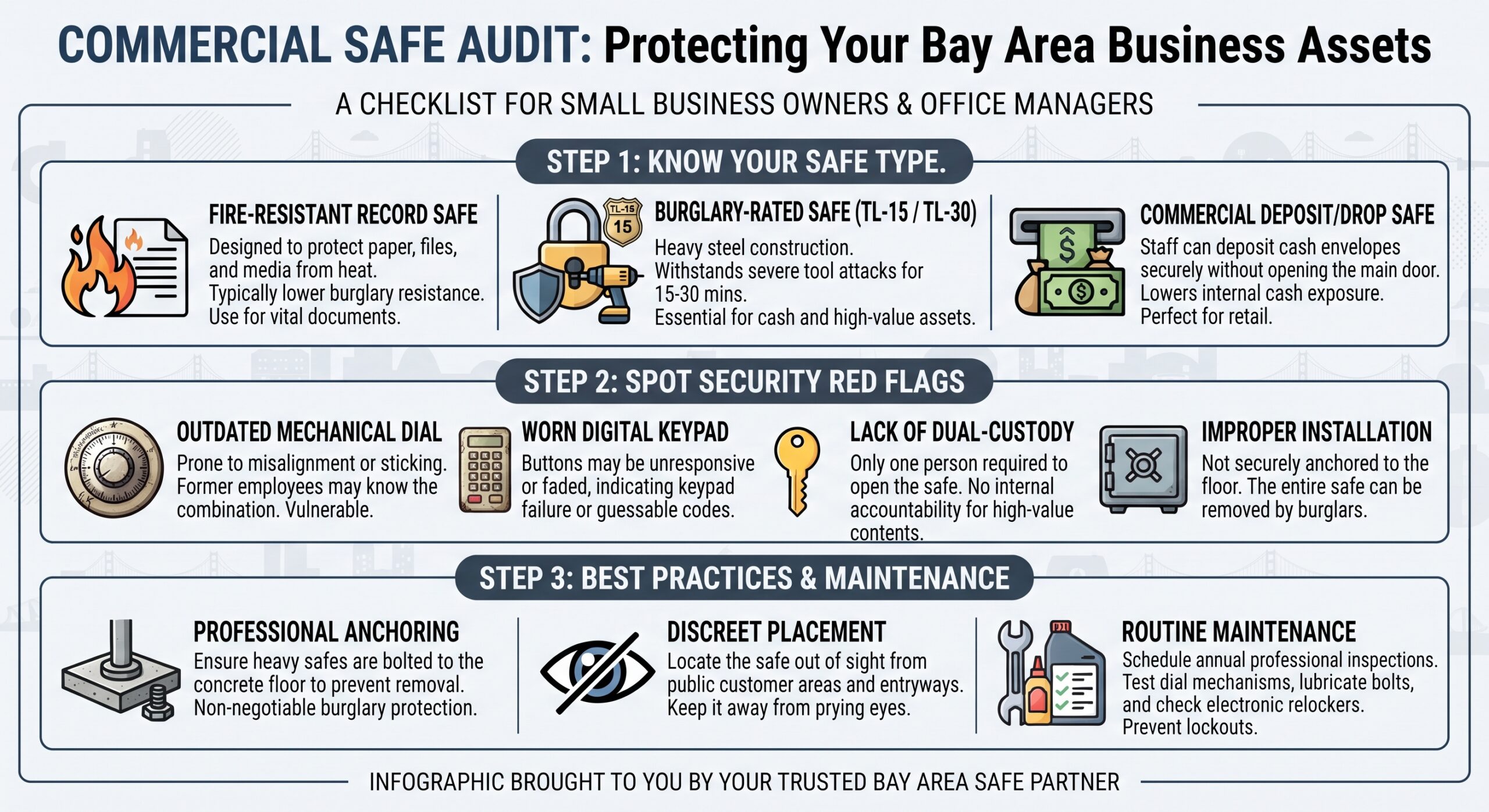
Not all commercial safes serve the same purpose. Before you evaluate your current setup, you must understand the core categories of commercial protection:
-
Fire-Resistant Record Safes: These units are designed primarily to protect paper documents, deeds, and digital media from extreme heat. While they keep vital records safe during a fire, standard models typically offer minimal resistance against determined burglars with pry bars.
-
Burglary-Rated Safes (TL-15 / TL-30): Built with heavy steel plates and composite materials, TL-15 and TL-30 safes withstand severe tool attacks for 15 or 30 minutes respectively. Therefore, these safes are essential for protecting high-volume cash, jewelry, and negotiable assets.
-
Commercial Deposit and Drop Safes: Perfect for retail environments, these safes allow staff to drop cash envelopes or deposit bags into a secure lower compartment without opening the main door. Consequently, internal cash exposure remains low throughout the business day.
Red Flags: Is Your Office Safe Outdated?
Over the years, commercial security standards have evolved significantly. If your business relies on aging hardware, you might be exposing your cash assets to unnecessary risk.
Watch out for these common warning signs:
-
Outdated Mechanical Dials: Old mechanical dials can slip out of alignment or become sticky. Furthermore, former employees may still remember the combination, posing an active security vulnerability.
-
Worn-Out Digital Keypads: Faded buttons, intermittent power responses, or lagging internal solenoids indicate that your electronic lock is nearing failure.
-
Lack of Dual-Custody Controls: Modern commercial environments often require two distinct users to authorize opening high-value vaults. If your safe only requires a single code, you lack vital internal accountability.
Best Practices for Commercial Safe Maintenance and Placement
Investing in a high-end safe is only half the battle. You must also ensure proper installation, maintenance, and strategic positioning to maximize your security posture.
-
Anchor-Bolting Compliance: A heavy safe that is not properly bolted to a concrete floor can be tipped over or carted away entirely. Professional anchor bolting is a non-negotiable requirement for true burglary protection.
-
Discreet Placement: Always locate your safe out of sight from public customer areas and entryways. Keeping the unit away from prying eyes prevents casual observers from noting your cash-handling routines.
-
Routine Professional Maintenance: Professional technicians should inspect dial mechanisms, lubricate bolt-work, and test electronic relockers annually. Regular upkeep prevents sudden lockouts during critical business hours.
Secure Your Business Today
Physical asset protection requires ongoing attention and proactive maintenance. By auditing your commercial safe setup today, you safeguard your daily cash flow and secure your vital records for the future.