
Is Your Church’s Biggest Risk Already Holding a Key? Key Control and Security for Houses of Worship
Houses of worship are built on a foundation of trust, openness, and welcoming communities. Unfortunately, this very openness can sometimes leave facilities vulnerable. Recent headlines highlight the reality of this risk.
In January 2026, a man in Lincoln, Rhode Island, was arrested for allegedly stealing roughly $16,000 in checks and cash from a local church. Most notably, police reported no signs of forced entry, pointing directly to someone who had authorized access or knew where keys and funds were kept. Similarly, in the Bronx, a church burglary at Our Lady of Angels demonstrated how physical vulnerabilities can lead to costly property damage and theft.
When trusted volunteers, frequent staff turnover, and old master key systems mix, many faith-based organizations lose track of who actually holds a key to the building.
The Hidden Vulnerabilities in Traditional Church Security
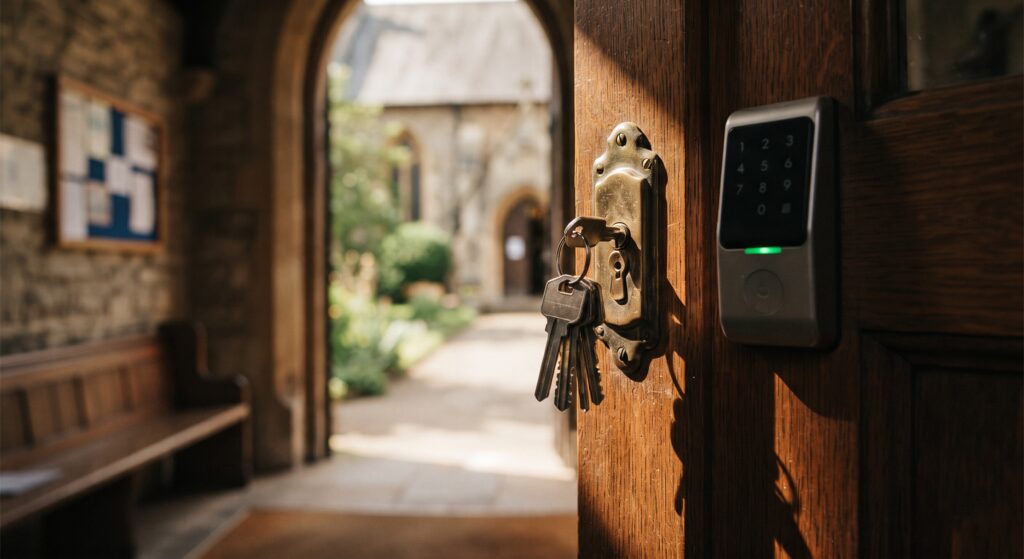
Many churches rely on traditional brass keys that have been passed down for decades. Over the years, copies multiply. Former youth pastors, retired board members, past volunteers, and contractors may still possess working keys.
Because security audits are rarely performed, leadership often operates blindly regarding physical access. When an incident occurs, traditional locks provide zero audit trails, making it nearly impossible to determine who entered a specific room or office.
Essential Steps to Secure Your House of Worship
Protecting your congregation, staff, and financial assets requires a proactive approach to physical security. Here are the core strategies every church, temple, mosque, and faith-based school should implement:
1. Rekey and Implement Restricted Keyways
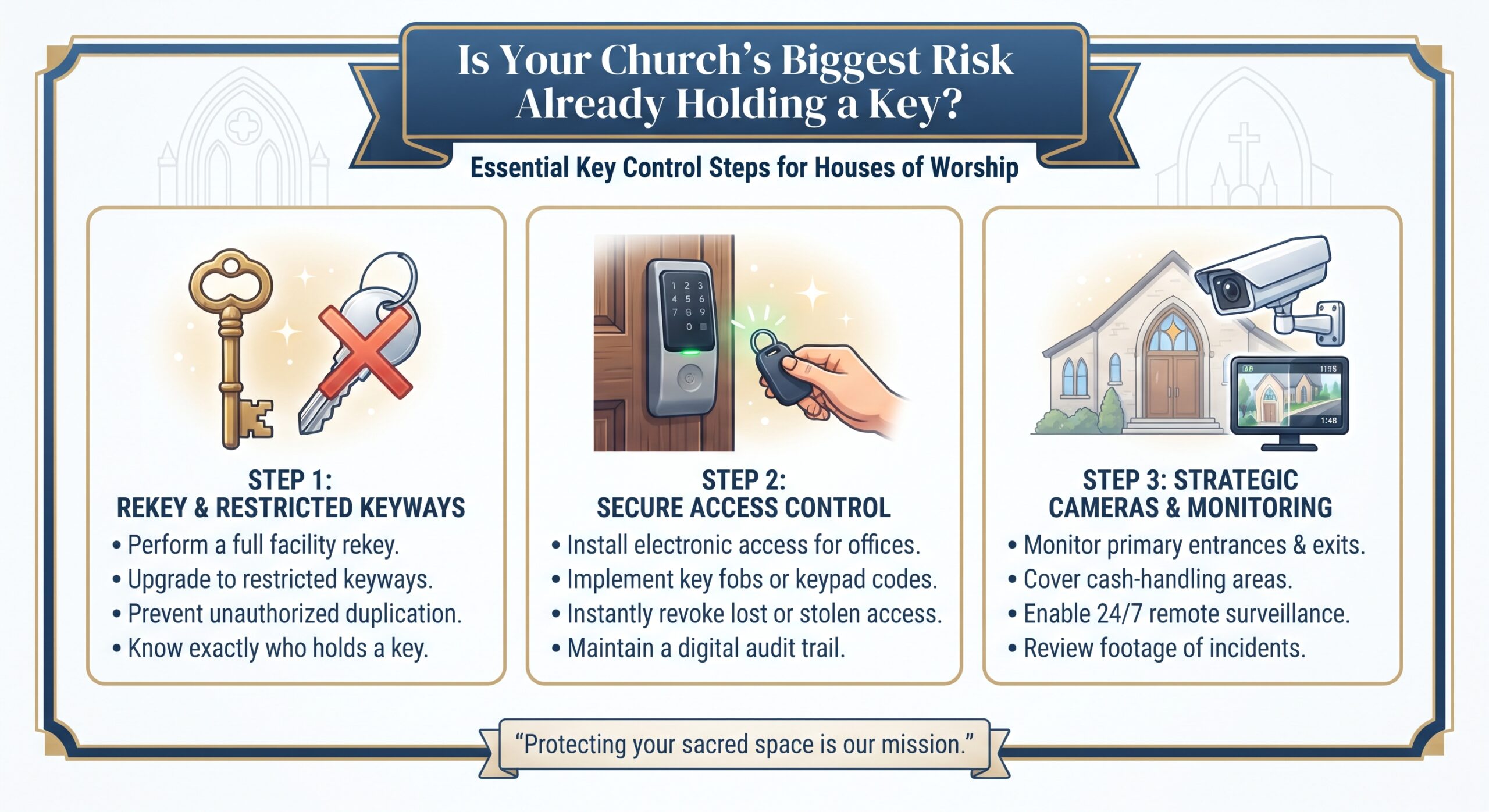
If you do not know how many physical keys exist in your community, your first step is a complete rekey. Furthermore, upgrade to restricted keyways. Unlike standard hardware store keys, restricted keys cannot be duplicated without authorization and a specific security card or signature. This stops unauthorized copying in its tracks.
2. Secure Access Control for Offices and Safes
Financial areas, administrative offices, and sensitive storage rooms require tighter oversight. Transitioning high-value zones to electronic access control systems or high-security restricted locks ensures that only authorized personnel can enter. Electronic keypads or key fobs also allow administrators to revoke access instantly if a fob is lost or a staff member departs.
3. Install Strategic Cameras on Entrances
Visibility acts as a powerful deterrent. Placing high-definition security cameras at all primary entry points, parking lots, and near cash-handling areas helps monitor activity 24/7. Modern IP cameras allow leadership to view live feeds remotely and review footage immediately if an incident occurs.
Moving Forward with Confidence
Your house of worship should remain a safe, welcoming sanctuary for your community. By tightening key control, auditing physical access, and modernizing your security infrastructure, you protect both your physical property and the financial trust of your congregation.