
Managing Employee Turnover: Best Practices for ReKeying and Changing Access Codes Without Downtime
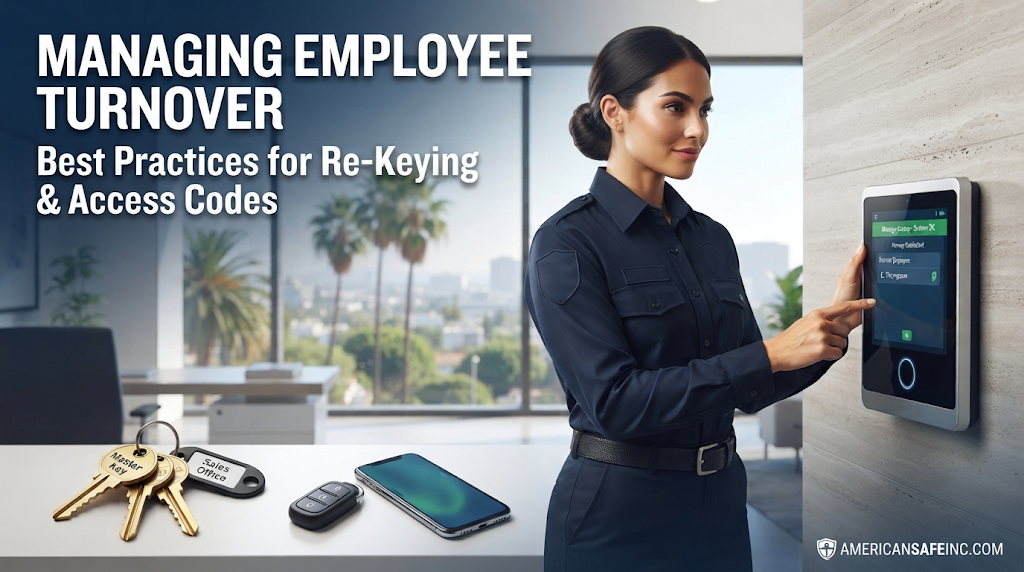
When an employee or contractor leaves your South Bay business, the transition can be stressful. Beyond wrapping up final projects and handing over passwords, physical security requires immediate attention. Whether you operate a retail storefront in downtown San Jose or manage a corporate office park in Silicon Valley, staff departures and vendor changes create hidden vulnerabilities.
Without a structured plan, doors remain un-keyed, former employees retain active mobile credentials, and your master key hierarchy becomes compromised. Fortunately, you can protect your facility without causing operational downtime. Below, we outline best practices for managing employee turnover, re-keying doors, and updating access codes efficiently.
Why Staff Departures Threaten Physical Security
Every business owner knows that staff turnover is a normal part of growth. However, many overlook the security risks tied to physical keys and electronic credentials. When a disgruntled employee or a short-term contractor leaves, they may still possess physical keys, garage clickers, or active PIN codes.
Furthermore, if unauthorized individuals duplicate keys without your knowledge, your facility is exposed to theft and liability. In busy commercial hubs across the South Bay, security must be proactive rather than reactive. By establishing a reliable protocol for every departure, you eliminate guesswork and safeguard your assets.
1. Establish an Immediate Key and Credential Audit Protocol
The moment an employee gives notice, your security protocol should begin. Do not wait until their final day to take action.
First, review your physical and digital key inventory. Make a list of every door key, padlock key, and electronic fob assigned to that specific individual. Next, verify whether they had access to master keys or sub-master keys. If they held a master key, the potential security gap is much larger, requiring swift re-keying of multiple zones.
2. Practical Schedules for Re-Keying Exterior Doors
Timing is everything when updating physical locks. If a departure is amicable, you can schedule re-keying outside of normal business hours. However, if a departure is involuntary, you must re-key exterior doors immediately.
-
High-Risk Exits: Re-key exterior doors and storage rooms on the exact day of departure.
-
Interior Offices: Update interior locks within 24 to 48 hours, especially if sensitive financial records or server rooms are involved.
-
Contractor Badges: Deactivate physical and digital contractor badges the moment a project concludes.
By sticking to this structured schedule, your team avoids panic while maintaining strict perimeter security.
3. Upgrading from Traditional Locks to Smart Access Control
If your business still relies entirely on traditional brass keys, employee turnover will always be an administrative headache. Every lost key requires a locksmith visit and costly cylinder replacements.
Upgrading to a commercial access control system eliminates this friction entirely. Modern solutions from trusted brands like Paxton, Kantech, and HID Global allow you to revoke digital credentials instantly with a single click. Instead of changing physical hardware, you simply deactivate a smartphone pass, key fob, or PIN code from your dashboard. This approach guarantees zero downtime and provides a complete audit trail of who enters your building and when.
4. Re-Evaluating Your Master Key Hierarchy
Staff turnover is also the ideal time to review your master key hierarchy. Over the years, businesses often accumulate dozens of disparate keys, making it difficult to track who can open which door.
When restructuring your master key system, consult with a professional commercial locksmith to implement restricted keyways. Restricted keys cannot be duplicated at local hardware stores without authorized identification. This ensures that former employees cannot secretly copy your keys before returning them.
5. Best Practices for Changing Digital Access Codes
Physical keys are only half the battle. Modern offices and retail spaces rely heavily on keypad deadbolts, gate codes, and alarm arming PINs.
-
Rotate Shared Codes Quarterly: Even without turnover, change general employee entrance codes every three to six months.
-
Assign Unique PINs: Never share a single master code among multiple employees. Assign individual user codes so you know exactly who disarmed the alarm.
-
Remove Access Instantly: Program your keypad or alarm software to delete a departing staff member’s credentials on their final morning.
Secure Your Business Today
Employee turnover is inevitable, but security vulnerabilities are entirely preventable. Whether you need emergency re-keying in San Jose, an upgrade to biometric access control, or a complete master key overhaul, American Safe Inc. is here to help local businesses protect what matters most.
As a veteran-owned security partner serving the South Bay since 1976, we deliver reliable, professional solutions tailored to your commercial needs. Contact our team today to schedule your facility security audit and keep your operations running smoothly.