
Commercial Security Upgrades: A Practical Checklist for Apartment and Office Properties
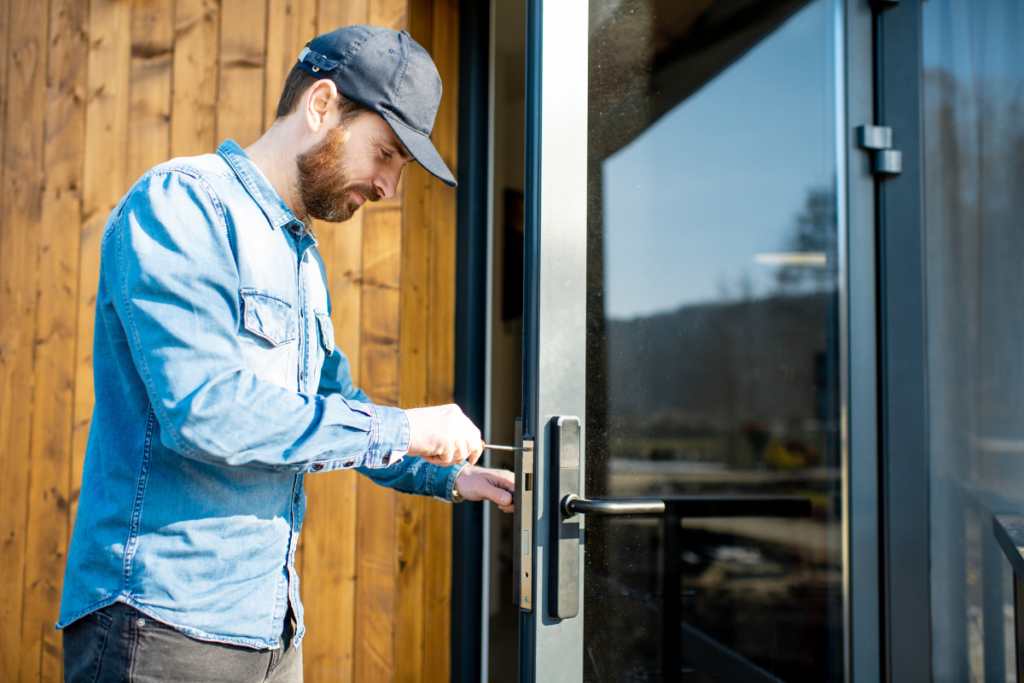
Nobody wants the call that starts with, “Something happened.” When you are planning commercial security upgrades, those moments are exactly what you are trying to prevent. A broken gate that kept residents from getting home, a package theft that turned into a heated dispute, a door that never quite latches, or a tenant who feels unsafe walking from the garage at night. For property teams, security is rarely a single big event. It is the steady pressure of preventing problems, responding quickly when they happen, and doing it all while keeping operations moving.
The good news is you do not need complicated tech talk or a full rip-and-replace to make meaningful improvements. The best commercial security upgrades are usually the ones that fix daily vulnerabilities first. Most effective upgrades follow a simple pattern: strengthen entry points, tighten who can access what, and improve visibility when something goes wrong. If you manage apartments, mixed-use, or office properties, use the checklist below to prioritize upgrades that are practical, measurable, and easier to manage.
Start with doors and basic hardware
If you are prioritizing commercial security upgrades, start here. Doors and gates are the foundation for everything else.
Most security problems begin at a door. If doors do not latch reliably, if frames are weak, or if closers are failing, even the best cameras and alarms will only record the moment something fails.
Walk your exterior doors and gates during normal hours and again after hours. Look for doors that do not close fully, entrances that can be propped open easily, and any access point that feels loose or poorly aligned. Pay extra attention to side doors, stairwells, and service entrances because those are often where issues show up first.
A simple goal here is consistency: every door closes, every door latches, and every high-traffic entry has hardware that can handle daily wear. If you have recurring trouble doors, treat them as priority upgrades because they tend to drive repeat incidents and repeat service calls.
Tighten key control and reduce rekey headaches
Keys are one of the most overlooked sources of risk in multi-tenant properties. Lost keys, uncontrolled copies, and vendor keys that never get returned can quietly expand access over time. That is a liability issue, but it is also an operational cost issue because rekeying becomes frequent and disruptive.
Start by documenting who has keys and what those keys open. Then align on a basic policy for turnover, lost keys, and vendor access. For many properties, a well-planned master key system reduces chaos by giving the right staff the right level of access without handing out “opens everything” keys to too many people.
If you are seeing frequent lock changes, inconsistent access across buildings, or confusion about who can enter critical rooms, it is usually a sign your keying strategy needs a reset.
Add access control where it matters most
Not every door needs access control, but certain doors almost always benefit from it. Main entries, staff-only areas, and high-liability spaces are where controlled credentials and audit trails make property operations easier.
Access control helps because you can remove access quickly when staff changes happen, you can set schedules for vendors, and you can reduce the constant cycle of rekeys. It also helps with accountability: when there is an issue, you can see exactly when a door was accessed and by whom.
A practical approach is to choose a handful of doors that impact safety and operations the most, then build from there. This keeps the project manageable and creates quick wins your team can feel.
Improve camera coverage for real incidents
Many properties already have cameras, but still cannot identify faces, vehicles, or the sequence of events when something happens. That usually comes down to camera placement, lighting, and covering the right areas.
Think in terms of outcomes. You want to clearly see who entered, when they entered, and where they went. That usually means strong coverage at main entries, mail and package areas, lobbies, elevator approaches, and parking access points. If your property has consistent trouble areas such as secluded corridors, bike storage, or dumpster enclosures, prioritize those too.
The most common mistake is relying on wide shots that capture a lot of space but very little detail. Clear identification at the point of entry is often more valuable than a broad overview that misses faces.
Confirm video quality and retention support your timelines
Even well-placed cameras do not help if the footage is low quality or overwritten before you need it. Retention is especially important because many incidents are reported days after they occur. If footage is gone by the time you learn about the issue, the system is not serving its purpose.
Make sure the video is sharp enough at key locations to support identification, not just general activity. Then confirm how long recordings are kept, and whether that matches how your team receives and escalates incident reports. It is also worth checking how easy it is to export footage securely, and who on your team has access to live view and playback.
This is where small upgrades can have outsized impact. Sometimes increasing retention or improving recording settings fixes the biggest pain points without replacing everything.
Consider intrusion detection and monitoring for the right spaces
Alarms and monitoring are most effective when they are used selectively. Leasing offices, management offices, IT closets, storage rooms, and other restricted areas are common candidates because they are valuable and often unoccupied after hours.
A key point: reduce false alarms by fixing door and hardware issues first. Alarms work best when doors close and latch properly and when sensors are placed with the actual traffic patterns in mind. If you already have an alarm system, it is worth reviewing notification procedures so the right people get the right information quickly.
Make systems easier to manage by connecting them
Properties run smoother when security does not require multiple logins and scattered tools. When cameras, alarms, and access control work together, investigations take less time and your team has a clearer workflow.
The practical benefit is speed. If an access event can be tied to video, staff can verify what happened without searching through hours of footage. Centralized management also helps multi-site teams reduce administrative overhead, especially when credential changes are frequent.
Keep it reliable with a maintenance mindset
Security systems fail most often through neglect, not through dramatic events. Doors go out of alignment, recorders fill up, cameras drift out of position, and small issues become “that camera that never works.”
The fix is routine. Periodic checks of doors, gates, recording, and camera coverage prevent the majority of surprises. Over time, standardizing equipment and processes across properties reduces service calls and makes training new staff easier.
A simple way to prioritize if you are unsure where to start
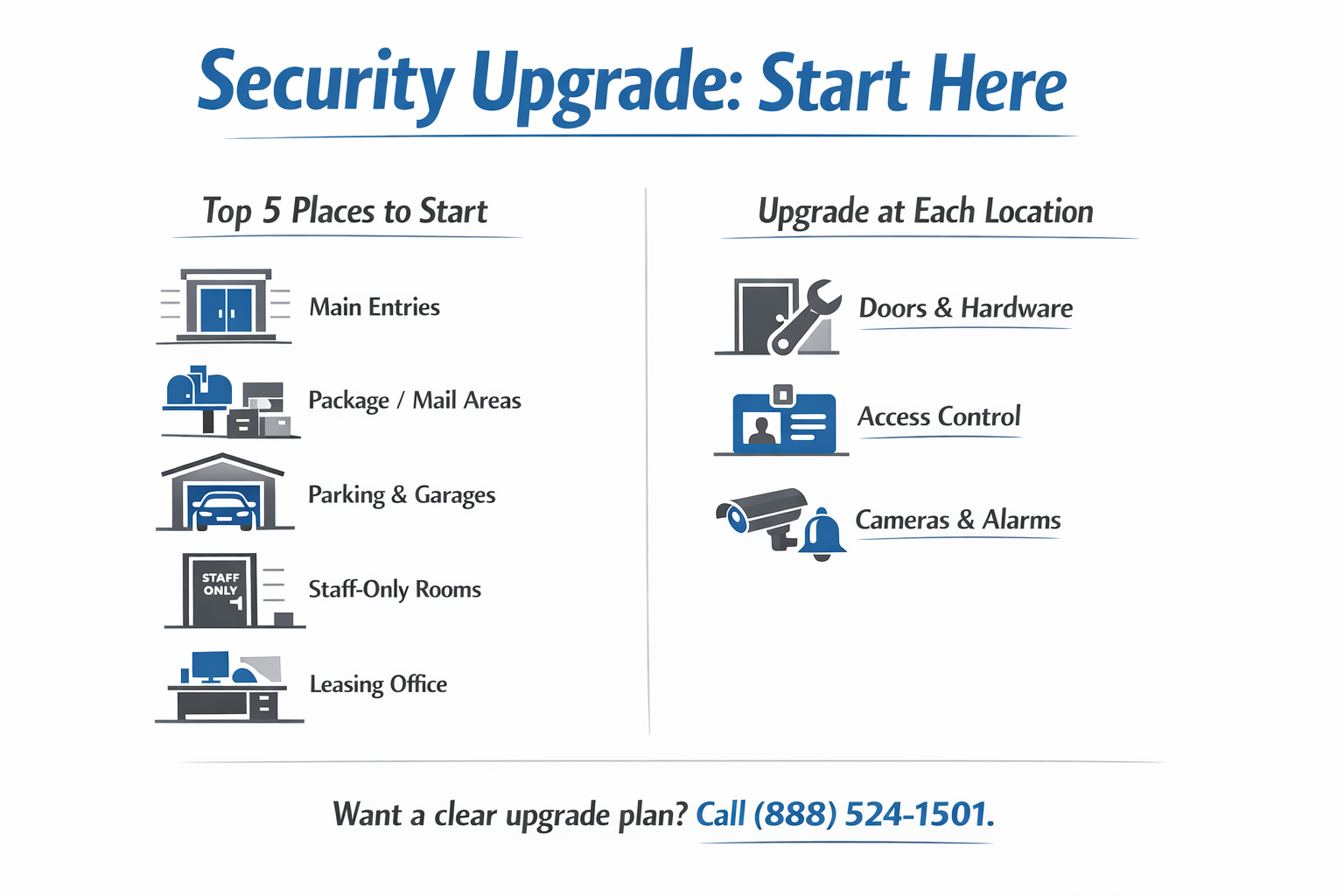
If you need a clear starting point, focus first on the places where incidents create the most liability and where access is hardest to manage: primary entries, package and mail areas, parking and garage entries, staff-only and mechanical rooms, and the leasing or management office.
Talk with a security specialist
If you are evaluating commercial security upgrades across one building or multiple sites, a site assessment can help you prioritize what to fix now and what to phase in later.
If you want a practical plan without the guesswork, American Safe Inc. can help you prioritize door security, key control, access control, surveillance, and commercial alarms and monitoring as one integrated system. Get in touch today to request a site assessment.
Key takeaways
- Start with doors and gates because most failures begin there.
- Tight key control reduces liability and cuts rekey costs over time.
- Add access control to high-impact doors first, then expand in phases.
- Camera placement matters more than camera count for usable footage.
- Confirm retention and export tools so video is available when you need it.
- Use alarms and monitoring strategically for after-hours protection.
- Connected systems simplify investigations and daily management.
- Routine maintenance prevents the most common security breakdowns.