Why Avycon Surveillance Cameras Matter for Bay Area Warehouse Facilities
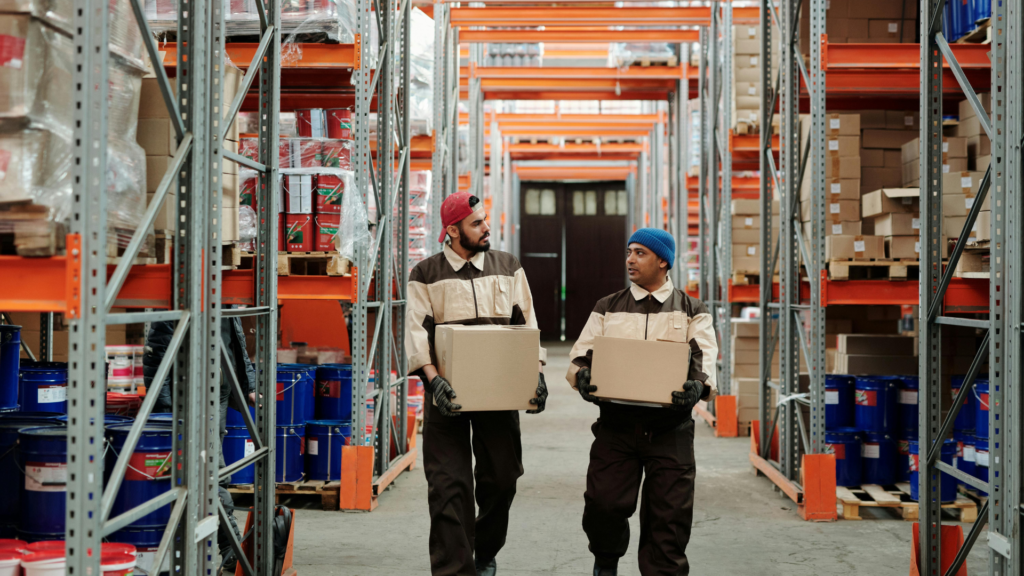
Warehouse facilities throughout the Bay Area continue to face increasing pressure to improve both security and operational visibility. With large inventories, multiple access points, shipping activity, and around-the-clock operations, warehouses often become vulnerable to theft, unauthorized access, liability disputes, and operational blind spots.
For many businesses, surveillance systems are no longer viewed solely as a security measure. Video monitoring has become an important operational tool that helps facility managers review incidents, monitor workflows, oversee loading dock activity, and maintain awareness across large commercial spaces. As warehouse operations become more complex, having reliable visibility throughout a facility can help reduce uncertainty and improve response times when issues arise.
At the same time, businesses are looking for surveillance solutions that balance image quality, scalability, and remote accessibility without overcomplicating daily operations. Commercial camera platforms such as Avycon are increasingly being considered for warehouse environments because they provide flexible monitoring capabilities suited for large-scale facilities.
Common Security Challenges in Warehouse Facilities
Warehouse environments present unique vulnerabilities because of their size, activity levels, and multiple access points.
Some of the most common concerns include:
- Theft and inventory loss
- Unauthorized access to restricted areas
- Loading dock disputes
- Employee safety incidents
- After-hours break-ins
- Limited visibility in large storage spaces
- Difficulty monitoring multiple locations
Without reliable video coverage, it can be difficult to investigate incidents, verify activity, or maintain consistent oversight throughout the facility.
The Role of Modern Surveillance Systems
Modern surveillance systems help warehouse operators improve visibility and awareness across critical areas of their facility.
Video monitoring can support:
- Real-time observation of operations
- Incident verification and investigations
- Monitoring of loading docks and deliveries
- Employee and visitor accountability
- Perimeter awareness
- Remote oversight for managers and supervisors
For many facilities, surveillance has become just as important for operational visibility as it is for security.
Why Avycon Cameras Are Well-Suited for Warehouses
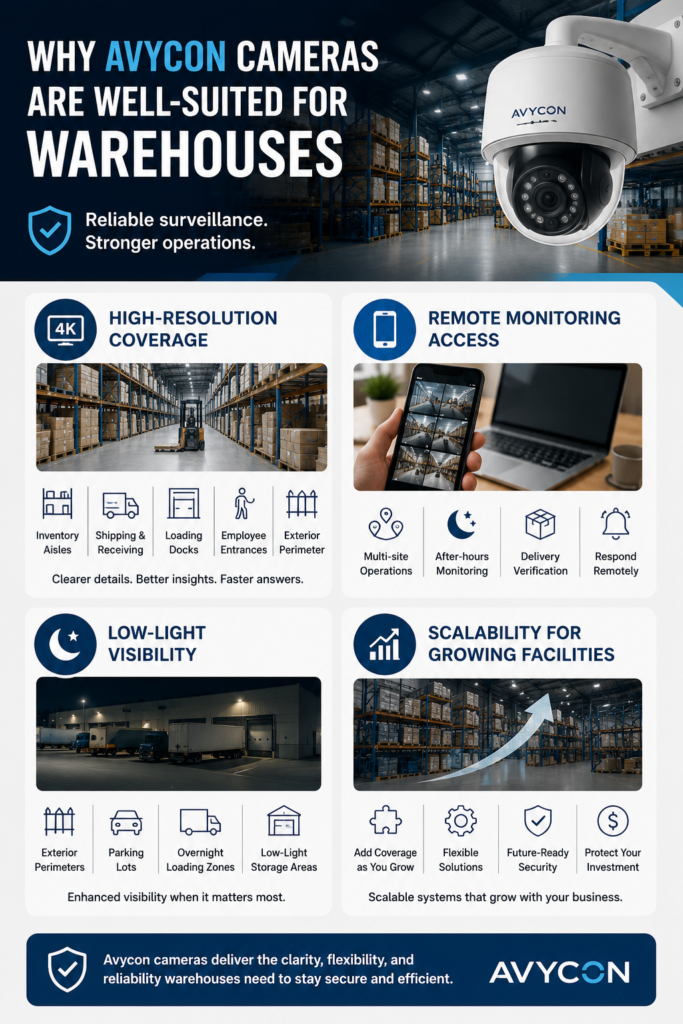
Avycon cameras are commonly used in commercial environments where wide coverage, image clarity, and remote accessibility are priorities.
In warehouse settings, several features can be especially useful.
High-Resolution Coverage
Large warehouse spaces require cameras capable of monitoring broad areas while still capturing usable detail.
Avycon camera systems can help provide visibility across:
- Inventory aisles
- Shipping and receiving areas
- Loading docks
- Employee entrances
- Exterior perimeter zones
Clearer footage can assist with reviewing incidents and identifying operational issues more efficiently.
Remote Monitoring Access
Warehouse managers and operations teams are not always on-site. Remote access allows authorized users to view camera feeds from mobile devices or desktop systems when needed.
This can be useful for:
- Multi-site operations
- After-hours monitoring
- Delivery verification
- Responding to incidents remotely
Low-Light Visibility
Many warehouse facilities operate around the clock or have low-light areas that require additional visibility.
Avycon cameras are designed to maintain video coverage in challenging lighting conditions, helping improve monitoring in areas such as:
- Exterior perimeters
- Parking lots
- Overnight loading zones
- Storage sections with limited lighting
Scalability for Expanding Facilities
Warehouse operations often evolve over time, requiring additional camera coverage or expanded monitoring capabilities.
Scalable surveillance systems can help businesses add coverage as facilities grow without completely replacing existing infrastructure.
Planning a Warehouse Surveillance Strategy
Before upgrading or installing a surveillance system, it is important to evaluate the facility’s operational and security priorities.
Areas to review may include:
Coverage Areas
Identify critical zones such as:
- Loading docks
- Entry and exit points
- Inventory storage areas
- Parking areas
- Shipping stations
Lighting Conditions
Evaluate low-light environments that may require enhanced camera performance.
Video Retention Needs
Consider how long footage should be stored based on operational requirements or internal policies.
Remote Access Requirements
Determine which personnel need remote viewing access and establish appropriate permissions.
Future Expansion
Choose systems that can adapt as operational needs change.
Improve Warehouse Visibility and Security Operations
Businesses evaluating warehouse surveillance solutions can benefit from assessing current coverage gaps, operational blind spots, and remote monitoring needs before security issues escalate.
To learn more about commercial surveillance strategies and integrated monitoring solutions for warehouse environments, contact American Safe Inc.
Key Takeaways
- Warehouse facilities face ongoing challenges related to theft, unauthorized access, and operational visibility
- Surveillance systems help improve monitoring, incident review, and day-to-day oversight
- Avycon cameras are commonly used in commercial warehouse environments because of their image quality and remote accessibility
- High-resolution coverage can help monitor loading docks, inventory areas, and perimeter zones
- Remote monitoring capabilities support multi-site management and after-hours oversight
- Low-light performance is important for overnight operations and exterior coverage
- Scalable surveillance systems can adapt as warehouse operations expand over time