
Navigating “Verified Response”: Why Bay Area Police Departments Are Changing Alarm Protocols
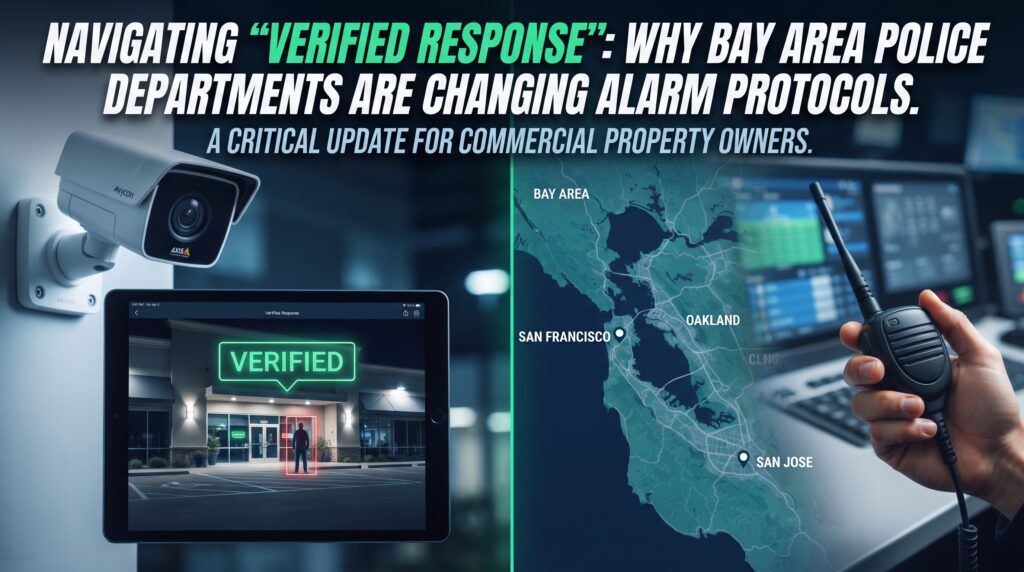
Municipalities and law enforcement agencies across the Bay Area are increasingly moving toward strict “Verified Response” policies, meaning traditional unverified burglar alarms no longer guarantee an immediate police dispatch. For commercial property owners and facility managers, this operational shift represents a major change in asset protection and risk management.
Furthermore, understanding these new municipal rules is vital to avoiding liability issues and protecting valuable inventory.
What “Verified Response” Means for Commercial Properties
In Santa Clara County and the broader Bay Area, police departments face high volumes of calls and limited resources. Because traditional alarm systems historically generated a massive percentage of false dispatches, local ordinances have shifted.
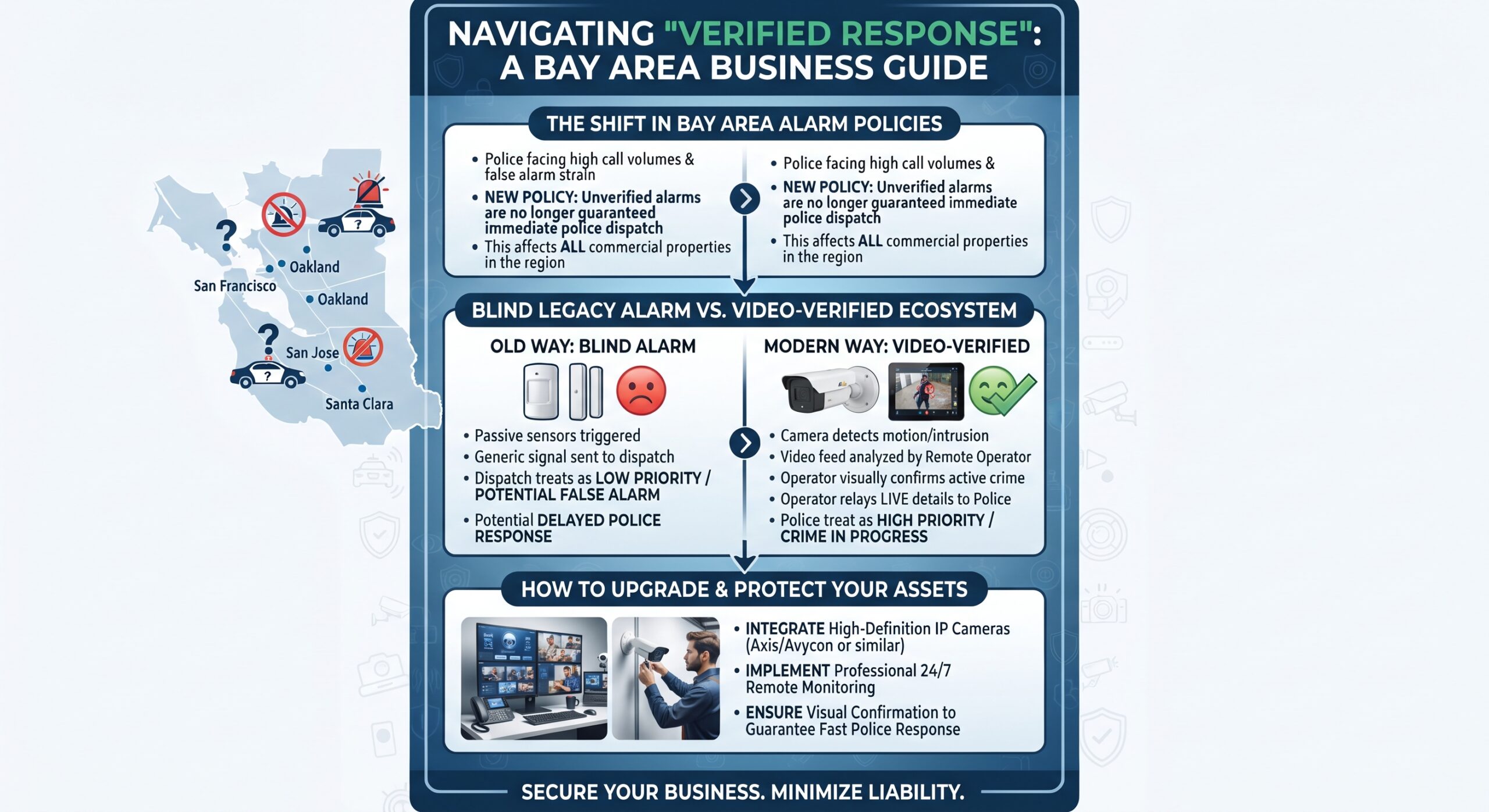
Under a standard Verified Response framework, police dispatchers will not send officers immediately to an unverified electronic alarm signal. Instead, they treat unverified alerts as low priority because false alarms historically wasted thousands of officer hours. Consequently, businesses relying on passive sensors face significant response delays unless an active crime is explicitly confirmed.
Blind Legacy Alarms vs. Modern Video-Verified Ecosystems
The critical difference lies in how an alert is validated. A blind legacy alarm relies strictly on a magnetic door contact or an analog motion detector. When tripped, it simply sends a generic pulse to a monitoring station indicating movement or a broken circuit.
Because dispatchers cannot tell if the trigger is an actual intruder, a stray pet, or an employee error, law enforcement treats the call as a low-priority notification.
However, a modern video-verified security ecosystem changes the equation entirely. By leveraging visual confirmation, monitoring personnel can instantly see whether a real break-in is occurring. Therefore, instead of waiting for an uncertain police roll-out, your facility benefits from immediate, high-priority action.
Upgrading Your Infrastructure: IP Cameras and Remote Monitoring
To ensure law enforcement treats an alert as an active crime in progress, businesses must upgrade their infrastructure. Integrating high-definition IP cameras—such as enterprise-grade Axis or Avycon systems—with professional remote monitoring services bridges the gap.
When an intrusion sensor trips, the intelligent security software immediately pulls up real-time HD video feeds. Trained remote operators visually verify the threat, catch the suspect on camera, and relay live details directly to local police dispatch.
As a result, police treat the incident as a verified crime in progress rather than a routine nuisance call. Upgrading your system protects your bottom line, eliminates costly false alarm fines, and restores the guarantee of rapid law enforcement response.