
Reducing Theft and Loss: Warehouse Security Camera Placement for Best Coverage
Warehouse managers do not usually discover a security gap on a calm day. It shows up when a pallet goes missing, a trailer seal is broken, a tool cage looks off, or a claim turns into a debate about what really happened. The goal of a warehouse camera system is not to blanket every square foot. It is to create clear visibility at the points where loss happens, and to capture footage that is actually usable when operations, HR, or insurance needs answers.
If you are trying to reduce shrink, prevent unauthorized access, and cut investigation time, camera placement matters more than camera count. Here is a practical approach to getting the best coverage.
Start with the highest-risk workflow points
Most warehouse loss ties back to predictable moments: receiving, staging, pick and pack, and shipping. Your first cameras should support accountability at the points where inventory changes hands or moves out of controlled areas.
Focus on capturing who entered, what moved, and when it happened. If a camera does not help you answer those questions, it is probably not in the right place.
Cover receiving docks like a transaction zone
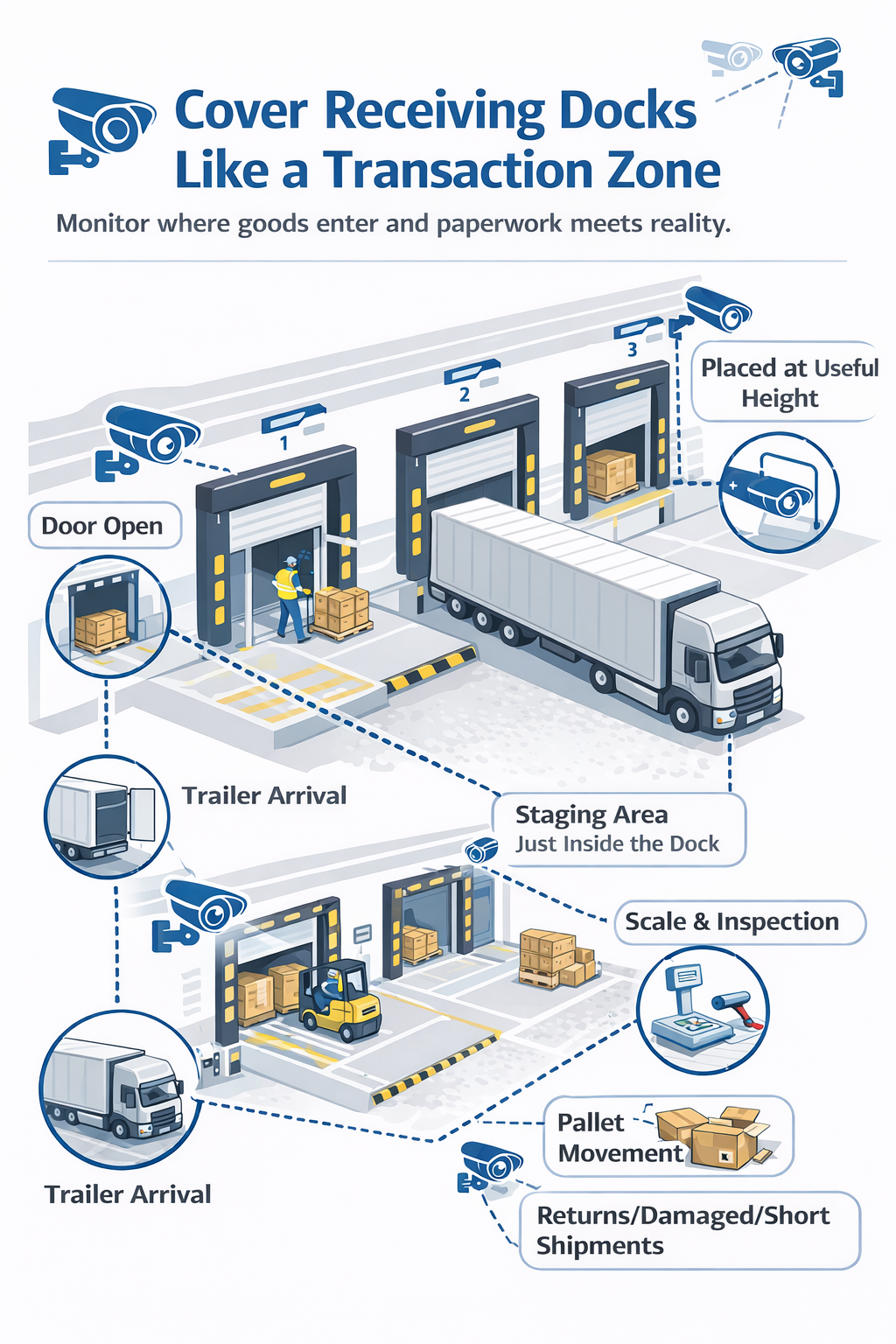
Receiving is one of the highest value camera locations because it is where goods enter the building and paperwork meets reality.
Aim coverage at the dock doors, the staging area just inside the dock, and any scale or inspection spot. You want to see trailer arrival, door opening, pallet movement, and any unusual activity around returns, damaged goods, or short shipments.
A common mistake is mounting cameras too high and too wide. Receiving works best when you can see faces and labels at the point of movement, not just forklifts passing through.
Treat shipping doors and outbound staging as priority coverage
Outbound loss can look like theft, mispicks, or mystery shrink, and it is hard to resolve without clean footage.
Place cameras to see the outbound staging lanes, the dock doors, and the path from staging to the trailer. When possible, capture trailer numbers or identifying markings, and clearly record the moment the product crosses the threshold out of the building.
If your operation uses will-call pickup or customer pickups, treat that area like a shipping dock. It deserves the same visibility.
Put cameras on the main choke points, not the whole floor
In most warehouses, people and products flow through a small number of predictable routes. Those routes are your best camera investments.
Look for intersections between receiving, bulk storage, picking, packing, and shipping. Place cameras so they view the direction of travel, not just the space. You want clean shots of movement and identity, which is easier when the camera is looking toward faces rather than down at heads.
This approach reduces blind spots without trying to survey every aisle.
Secure high-value storage and controlled areas
If you store high-value, high-theft items or regulated inventory, cameras should reinforce controlled access.
Good examples include tool cribs, cages, IT closets, electronics storage, returns cages, and any area where shrink has historically occurred. In many facilities, the best coverage is outside the door and at the entry path, paired with access control so you can connect who opened the door with video of what happened next.
Cover time clocks, break areas, and internal exits with care
Internal theft investigations often hinge on time windows and movement between zones. Cameras near time clocks, employee entrances, and internal exit routes can help validate timelines.
At the same time, be thoughtful. The goal is safety and accountability, not creating a workplace that feels overly monitored. Focus on entrances, exits, and routes, not on lingering close-ups of break areas.
Make exterior coverage do real work
Warehouses often have wide perimeters, multiple gates, and vulnerable corners. Exterior cameras should focus on where people and vehicles enter and where goods could leave.
Prioritize vehicle gates, pedestrian gates, yard entrances, and dock exteriors. If you have trailers stored onsite, dedicate coverage to trailer rows and any area where theft or tampering has occurred. Lighting matters here. If night coverage is unclear, placement alone will not solve it.
Do not forget the small loss zones
Small items can create big losses when they disappear repeatedly. Areas that commonly need coverage include pack stations, returns processing, and any place where product is opened, relabeled, or consolidated.
A camera that clearly shows the pack bench, label printing area, and tote movement can resolve disputes and reduce recurring shrink.
Make sure the footage is usable, not just available
Even good placement can fail if video quality and retention do not match your reality. Warehouses are fast-moving, and evidence needs to be clear enough to support decisions.
Pay attention to whether your cameras can capture identifying details in motion, whether the warehouse lighting creates glare or dark zones, and whether your retention lasts long enough for incidents to be noticed and escalated. Many losses are discovered days later, not the same shift.
Pair cameras with access control and alarms where it makes sense
Cameras are strongest when they work as part of an integrated system. Access control can tell you who entered a cage or restricted room, and cameras can verify what happened. Alarms and monitoring can add protection after hours for offices, IT rooms, or high-value areas.
This traditional plus digital approach is often how warehouses reduce both theft and downtime without making operations harder.
Talk with a security specialist
If you want a warehouse camera plan that reduces loss and supports real investigations, American Safe Inc. can help you design coverage around your workflow, not just your floor plan. We can also integrate cameras with access control, door hardware, and commercial alarms and monitoring when needed. Call us to request a site assessment today.
Key takeaways
- Place cameras where inventory changes hands: receiving, staging, and shipping
- Use choke points to cover movement instead of trying to cover every aisle
- Prioritize high-value storage, cages, and returns processing
- Exterior coverage should focus on gates, yard entry, and dock exteriors
- Usable footage depends on placement, lighting, and retention
- Pair cameras with access control for stronger accountability